Low-Calorie Diet (LCD) Before Bariatric Surgery

Although reducing body weight before any surgery is generally a good way to decrease risks associated with surgery, particularly with general anaesthesia, rapid weight loss has another crucial effect beneficial to bariatric surgery (or other abdominal surgery). It will reduce fat and glycogen stores around the liver, making it smaller and softer to work around; therefore, Low Calorie Diet (LCD) is often synonymously known as a Liver Shrinking Diet.

There are a few different ways to go about the pre-op LCD, and the tricky part is to ensure you maximise the nutritional quality of whatever method you use. The chemist, health shop and well-stocked supermarkets usually offer a variety of meal replacement drinks and products that are nutritionally complete. And, of course, many are also available online. Thus, in practical terms, LCD drinks can be easier to ensure you receive the nutrients you need and track your calorie intake to ensure it doesn’t exceed 1000 kcal a day.

The length of time you need to be on an LCD before surgery varies depending on your Body Mass Index (BMI); your consultant will discuss this with you. Generally, if the BMI is at the higher end of the obesity range, your LCD period will be longer than when the BMI is in the lower range. For example, my BMI was 50+++, so my consultant asked me to do an LCD for 4-5 weeks.

I am not going to lie – I was dreading it. Before starting the LCD, I purchased several different products, including Slim Fast drinks and HUEL shakes, and I could not stand any of them or any flavour. And the thought of not chewing for five weeks didn’t appeal to me. So, therefore, I opted for a food based diet, counting calories.

The first few days were awful; the expression ‘hangry’ really applied, but it appeased after 4-5 days and felt much more manageable. The experience was completely different from any other time I’d gone on a diet, this was hard, but psychologically it was easier as it helped to know there was a definite end to it. Also, I’m not planning to ever go on a calorie-restricted diet again as long as I live. I actually relished the challenge of the LCD, and it was encouraging to know I would have better tools to manage overeating after the surgery. My body would work with me rather than against me. Of course, post-surgery, you must adapt to making better and healthier food choices. But the great thing is that there are no ‘forbidden’ foods in principle. Nevertheless, some foods can be more challenging to consume, particularly in the first few months, and you should avoid highly sugary and fatty foods.

A comforting thought, for me at least, is that it is not like you can’t ever have another piece of chocolate again (I’m a recovering chocoholic 😉). However, you won’t be able to eat much of it, as consuming too much sugar or fatty food can cause dumping*. The beauty of bariatric surgery is that your body will draw your appetite towards healthier, more nutritional food. Basically, the signals between the gut and the brain will be rebooted, upgraded even. It will be easier to understand what your body needs rather than trying to decode corrupted messaging about false appetites and cravings. However, it is probably a good idea to mention that getting used to this ‘new system’ can take some time. You may need up to 12 months to adjust to this new system and adapt to new habits. Because your food preferences will likely change, and you will need to eat smaller portions and more regularly throughout the day, you will need time to implement these changes.

I lost 12kg during the LCD, which was the target the consultant had set for me. Since I was having my surgery abroad and would be staying in Sweden for the duration of my recovery, I was very busy at work leading up to travelling. In addition, I worked from home, so I had only rotated a few different pieces of clothing and not worn many different clothes during the LCD before travelling. When I arrived in Malmö, in the south of Sweden, before my surgery, I changed into clothes I’d not used since the previous winter and found that most of the items I’d brought were extremely loose already. This was a big contrast to my previous experience, where I’d put on clothes I’d not worn for a while, only to find that they were too tight.

That was where my weight loss journey started to kick off. I am currently 13 weeks post-op, and the weight is effortlessly coming off at a steady pace. The enjoyment is that I am not ‘on a diet’.

Before signing off, I would like to emphasise again that using an LCD as a quick way to lose weight is not recommended unless supervised by a health professional. The risks of malnutrition and corrupting your metabolism will likely lead to regaining the weight again and even promote additional weight gain. To understand why dieting is problematic, particularly in people who have been chronically overweight or those living with obesity, please (re)visit my featured blog (Mis)Understanding Obesity.

*” Dumping syndrome occurs when food, especially sugar, moves too quickly from the stomach to the duodenum—the first part of the small intestine—in the upper gastrointestinal (GI) tract. This condition is also called rapid gastric emptying.”

“Dumping Syndrome.” Wikipedia, Wikimedia Foundation, 24 February 2023, en.wikipedia.org/wiki/Dumping_syndrome.
Navigating the Road To Bariatric Surgery – Part 2 (2)

After fifteen months, which felt like forever, from talking to the GP (General Practitioner), completing a 12-month Healthy Weight (HW) programme and finally meeting the NHS (National Health Service) specialist bariatric consultant, I decided to seek private treatment. 

The fifteen months leading up to my decision to do that was challenging. When I first decided to go for weight-loss surgery, I felt elated; however, simultaneously, my sister was seriously ill with lung cancer. Then, five months later, my sister died. After that, life did not feel the same. I was, and still am, grief-stricken. When you lose a loved one, it is natural to question and re-evaluate your beliefs and priorities in life. But, although I had already started taking action to pursue bariatric surgery, my sister’s passing strengthened my conviction. I knew I’d made the right decision to get help to optimise my future health.

A parent is not supposed to bury their child, regardless of age. It is not in the correct order of life. My dad passed away years ago, so I wanted to be there for my mum. I live in London in the UK, but I was born and grew up in Stockholm, Sweden, where my mum still lives. One good thing as a result of the pandemic was that many organisations figured out how people can effectively work from home. It meant I could work remotely and be with my mum for a couple of months.

A few days after losing my sister, I encountered another obstacle while preparing to travel to Stockholm. I went to a regular weigh-in as part of the HW programme, where I told them I was going abroad. Apart from the weigh-ins’, I’d had all my therapy-, dietician- and activity coach sessions over the phone. As we were in the middle of the pandemic, the guidance also stated that if you were uncomfortable attending in person, you could weigh yourself at home and report it back to the HW practitioner. So, I hadn’t expected any issues to arise with me going abroad for a period. Instead, they told me I would have to start again when I returned to the UK – I was three months into the programme at that point. They said they wouldn’t treat me while abroad. I was FUMING! It didn’t make any sense. How I managed to keep my composure, I don’t know, but I did. Instead, I asked if they could make an exception since I’d suffered a family loss. They were going to check with a supervisor and come back to me. I left and sat in my car in the clinic’s car park, bawling my eyes out.

After 15 minutes of tears running down my face and an emotional phone call to my mum, I made my way home. As I pulled up outside my house, my mobile phone rang; as promised, the HW practitioner had checked with the supervisor, and everything was fine. I would not need to start again when I returned to London, and the treatment would continue while I was away as it had – over the phone. I could have done without the upset and the stress of it, though.

To receive weight-loss surgery treatment through the NHS in the UK can be difficult and seemingly unnecessarily so. The process patients must go through is agony when they already fit the criteria set by the NHS. Having weight loss surgery is not a quick fix, nor should it be looked upon as some kind of cosmetic vanity surgery. It is a medical procedure that will save lives and ultimately costs by reducing the development of comorbidities. Weight loss surgery will have a significant impact on a person’s life, both physical and emotional. Thus, I would argue that the format of the HW programme would be much more beneficial as a post-surgery resource. Any necessary pre-surgery preparation can be covered solely by the services at the bariatric clinic. It seems redundant that a GP cannot refer a patient directly to a bariatric specialist; since, at that point, the GP should have established that the patient’s previous attempts to lose weight have been unsuccessful.

The list below outlines the criteria for when weight loss surgery is available on the NHS:

  • you have a body mass index (BMI) of 40 or more, or a BMI between 35 and 40 and an obesity-related condition that might improve if you lost weight (such as type 2 diabetes or high blood pressure)
  • you’ve tried all other weight loss methods, such as dieting and exercise, but have struggled to lose weight or keep it off
  • you agree to long-term follow-up after surgery – such as making healthy lifestyle changes and attending regular check-ups

People who might benefit from bariatric surgery don’t know it is a viable treatment option. Many don’t even seek help from their healthcare provider because of the stigma attached to fatness. Instead, they join a weight loss club or start a diet plan based on calorie reduction and exercise to burn more calories. When the diet and exercise plan collapses, people put the ‘failure’ down to poor character. Because this is what society tells us, fat people are lazy, lack discipline and eat nothing but unhealthy foods. Fat phobia is living large in the UK (and across the world).

Another problem, and it is a huge one, is that knowledge about effective obesity treatment is still lacking among health practitioners. They are still harping on with the ‘eat less, move more’ approach, which has proved ineffective for most obese patients. Also, keep in mind that health professionals are not immune to the deep-rooted misconception about fatness and the impossible societal beauty ideals. More importantly, they are not necessarily well-educated in the complex factors causing obesity, such as abnormal regulation of energy balance (which is influenced by genetics, hormones, etc.). Energy balance is not as simple as the balance between calories consumed and energy expenditure (basal metabolic rate(*) + physical activity), which is the driving concept of ‘eat less, move more’.

When excessive weight is sustained over an extended period, the chances of shaking it off and maintaining weight loss with diet and exercise become slimmer (excuse the pun). The ‘set point’ theory explains how your body fights to maintain the elevated weight, making it nearly impossible to sustain a significant weight loss achieved by a calorie-controlled diet. Yet, surprisingly, the set point theory is not public knowledge or widely known within the health profession (or industry) outside of metabolic/bariatric specialists.  

Your body is very clever, but it has not adapted to the relatively recent increase in food availability over the last 40-50 years; its instinct is survival. Throughout human history, the body has negotiated survival in a state of starvation (for thousands of years) more than in an environment of abundant food availability. Hence, it’s not surprising the body is protecting the excess – it’s conditioned to build a reservoir in case of future scarcity. Also, the body doesn’t care what it looks like.

Despite the 30 minutes of upset where I thought I would have to restart the 12-month HW programme, I persevered. Just a couple of days before I travelled to Sweden, I met with the regional specialist consultant assigned to the HW programme to provide guidance and assess your suitability for surgery. Taking my knowledge and experience into account, I found that talking to a bariatric consultant was probably the most helpful element of the 12-month programme. Fast forward ten months, when I had completed the HW programme, I sat in the same consultant’s clinic in a South London Hospital on a beautiful August morning. That’s when I received the gut-wrenching news that the current waiting time for surgery was 3 to 5 years.

That afternoon, I called a well-renowned clinic in Stockholm, which referred me to GB Obesitas in the south of Sweden. This was when I experienced a fundamental shift, and things started moving at my preferred pace (‘make it happen now’). The most amazing nurse called me in response to a brief email explaining my circumstances. I had comprehensive information sent to me backing up what the nurse had outlined to me over the phone. It can be overwhelming to receive a lot of information in one go, so the guidance notes were beneficial as I could revisit the guidance when needed. Finally, we booked a date for surgery in November 2022.

The ball really got started rolling from there on. I attended an online information group meeting, a 1:1 consultation with the bariatric consultant, did blood tests through my GP surgery in London, emailed the results to the clinic nurse, and then started the pre-op diet. I will tell you more about the pre-op diet in a separate post.

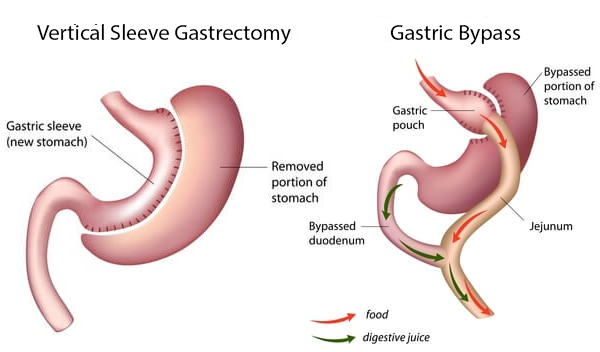
I was excited that I finally had a date for surgery. From the beginning, I had been pretty set on having gastric sleeve surgery, which I had discussed with the consultant in London. However, after talking to the consultant in Sweden, I changed my mind. By their recommendation, I decided to have a gastric bypass instead. Both surgeries are very effective, but the bypass generally generates more significant weight loss, approximately 80% of the excess weight compared to 70% with a sleeve. Thus, the bypass is generally a better option for someone like me with a very high BMI and you have more weight to lose. Ultimately, that was the deciding factor for me to choose gastric bypass surgery over a gastric sleeve.

If you are considering bariatric surgery, do your due diligence and research which surgery might suit your circumstances best. For example, if you already have acid reflux problems, it can get worse after gastric sleeve surgery, and it is also something that might start to occur even if you haven’t suffered from it before. Also, smoking can cause ulcers after bariatric surgery – especially with a gastric sleeve. Finally, among the side effects of gastric bypass is bowel obstruction which would require another surgery.

All this is due to the difference in post-surgery anatomy and not the surgeon’s skill level. Discuss your preference with your consultant but be receptive to their professional recommendation. After all, you want to achieve the best possible long-term health outcomes.

You might find the YouTube video below helpful in your research, where the American doctor John Pilcher explains how the two different surgeries work and the difference between the two (gastric sleeve and gastric bypass). 

I wish you great success and all the best if you are about to set off on a journey exploring bariatric surgery.

All is well.

Milla ♥

(*) basal metabolic rate – the amount of energy expended while at complete rest

Navigating the Road To Bariatric Surgery – Part 1 (2)

The decision to have bariatric surgery was nearly twenty years in the making. When I eventually decided to pursue gastric surgery, I seized immediate action. I had a face(mask)-to-face(mask) appointment with a doctor at my GP (General Practitioner) surgery within a few days, which was impressive considering we were in the middle of the pandemic lockdown. I could tell that the young doctor had not done a referral for bariatric treatment before, but they were very supportive and knew better than to ask if I’d tried ‘eating a bit less and moving a bit more’. The National Health Service (NHS) rule in England is that patients should receive consultant-led treatment within 18 weeks of referral. However, since it was in the middle of the Covid pandemic, I asked how long the referral to the consultant might take. They could not tell me, but I understood and didn’t feel discouraged. It felt amazing to have taken that first step.

I didn’t know at that point that in England, you have to go through a 12-month Healthy Weight programme before an actual referral goes to the specialist consultant. I found this out weeks later, and I assume the doctor didn’t know either since they didn’t tell me (and I had asked many questions). The NHS website doesn’t mention that a Healthy Weight (HW) programme is a pre-condition for surgery – this made me angry. It had been such an emotional decision, and I was devastated. Mainly because I knew there wasn’t anything within the programme that would be new to me. I have successfully lost a lot of weight several times over the years; also, I have done so much work with myself through self-help and therapy that I was ready. Completing a 12-month programme before even going on the waiting list for surgery felt like a cold slap in the face. Why prolong the suffering and the associated comorbidity risks?

The HW programme involved regular sessions with a therapist, a physical activity coach, and a dietitian and frequent weigh-ins. As it was during the pandemic, all sessions apart from the weigh-in were over the phone. You are expected to lose at least 5% of your body weight. Although I was miffed, to say the least, having to complete the programme course, I have to say that all the practitioners I interacted with throughout the twelve months were lovely, professional, caring and supportive people.

My Body Mass Index (BMI) was very high, one of the markers for when a referral can be made sooner than twelve months. If your circumstances are considered ‘higher risk’, they can refer you after six- or nine months. I was referred after six months. However, you must complete the 12-month HW programme simultaneously with any pre-surgery treatment the consultant prescribes. This may sound confusing, so I will clarify. Only the specialist consultant can assess if you are suitable for surgery. Thus, you don’t go on the waiting list for the actual surgery until the consultant has assessed your suitability, and then there is a wait for surgery. Pre-Covid, the waiting time for surgery was around 18 months. Hence, that is why the programmes can overlap.

I find the process incredibly ridiculous and, to a degree – condescending; it is a very blanket approach. If all goes smoothly and you are lucky, the time frame from seeing your GP to getting surgery is about two and a half years. From a public health perspective, bariatric surgery is a cost-effective treatment of obesity with long-standing projective improvements in health and reductions in comorbidities. Several reviews support this (Welbourne et al., 2016). However, achieving sustained weight loss through non-surgical strategies has proven ineffective (Fildes et al., 2015; Wing et al., 2005). If you haven’t already, I want to encourage you to go back one step and read and watch the video explaining ‘Set Point Theory’ in my previous blog post – ‘(Mis)Understanding Obesity’.

Despite significant support for bariatric surgery, the treatment seems inaccessible for many people suffering from obesity. The current 4-tier process is tedious; GPs cannot refer patients directly to specialists, which doesn’t set patients up for optimal results. 64% of the UK population is overweight, with 28 % and 3% being obese and morbidly obese, respectively, within that figure (NHS Digital 2020a). That number is staggering, one of the highest in Europe. However, surprisingly the annual rate of bariatric surgeries is low compared to other European countries. For example, in 2019/20, only 5,741 surgeries were performed in England (NHS Digital’s National Obesity Audit Dashboard). In Sweden, with a population significantly lower (c. 10 million) than England (c.55 million), 4,700 people received bariatric surgery in 2019 alone (Näslund et al., 2022). It displays a very different approach to using bariatrics to stem obesity and lowering comorbidities.

I was fast-tracked, my referral was sent to the specialist consultant six months into the HW programme, and I had just completed the 12 months in July 2022 when I first saw the specialist consultant in August – 15 months after initially seeing the GP. That’s when I received cold slap number 2 – they told me the waiting time for surgery would be 3 to 5 years. The consultant was embarrassed. Due to surgeries being sanctioned for a long time during the pandemic, they were behind, with an increasing waiting list.

Not that it was a huge surprise that there would be some waiting time, but 3 to 5 years was beyond believable. Truth be told, I was already extremely fed up with waiting. I’d lost my sister prematurely to lung cancer during the first quarter of being on the HW programme, and I was not prepared to play around with my health anymore. I was fortunate to be able to seek private treatment, an option that is not feasible for most people.

Bariatric surgery is an essential tool in treating obesity, along with medication and prevention programmes. However, it cannot be ignored that a vast proportion of the population is overweight and obese in most developed countries. Food availability, quality of food, physical activity and stress levels all played a part in getting us where we are today. In the UK National Bariatric Surgery Registry 2020 report, Batterham and Zakari describe obesity as “an impaired physiological state driven by a combination of discrete genetic, hormonal, and metabolic disorders alongside environmental triggers”.

Thus, it is a substantial and complex quest to conquer the so-called obesity crisis.  

  • Fildes A, Charlton J, Rudisill C, Littlejohns P, Prevost AT, Gulliford MC. American Journal of Public Health. September 2015, Vol 105, No. 9
  • NHS Digital, National Obesity Audit Dashboard
  • The UK National Bariatric Surgery Registry; Third Registry Report 2020. p17
  • Näslund E, Ottosson J, Våge V, Sundbom M, Mala T. Scandinavian Obesity Surgery Registry’ Annual Report Norway and Sweden Third joint report: 2019-21. June 2022.
  • Welbourne R, le Roux CW, Owen-Smith A, Wordsworth S, Blazeby JM. Why the NHS should do more bariatric surgery; how much should we do? British Medical Journal 2016; 353:i1472
  • Wing RR, Phelan S. Long-term weight loss maintenance. Am J Clin Nutr. 2005;82(1):222S—225S

(Mis)Understanding Obesity

There are so many misconceptions about people that are overweight or obese. It is not helped by a diet and beauty culture that shuns bodies that are bigger. There are literally thousands of methods, meal- and exercise plans and influencers claiming to have the answers to making you slimmer and more attractive. Many punish themselves by going on extreme diets that make all the promises about thinness and beauty only for you to regain the weight, plus more, down the line. It is a vicious circle that can take a toll on your mental well-being.

A common compliment is “have you lost weight? you look great”, clearly suggesting that the shedding of the weight has made you look better, reinforcing the culture of ‘thinner is more beautiful’. Of course, if you have really made an effort with diet and exercise, a compliment like that can be a real boost because, to an extent, we are all conditioned to believe in the unrealistic beauty ideals set by diet culture.

My personal journey with my body weight has been a long road. I have been overweight since childhood, and it really spiralled upwards in my 30s and onwards. My go-to-diet has always been Weight Watchers. I have lost a lot of weight on several occasions following their method. However, each and every time, I have not only regained the weight but always put on more.

This insightful YouTube video explains the ‘set point’ theory and why, despite huge efforts to lose weight, traditional ‘dieting’ fails.