

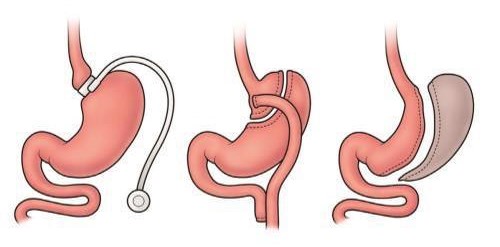
The decision to have bariatric surgery was nearly twenty years in the making. When I eventually decided to pursue gastric surgery, I seized immediate action. I had a face(mask)-to-face(mask) appointment with a doctor at my GP (General Practitioner) surgery within a few days, which was impressive considering we were in the middle of the pandemic lockdown. I could tell that the young doctor had not done a referral for bariatric treatment before, but they were very supportive and knew better than to ask if I’d tried ‘eating a bit less and moving a bit more’. The National Health Service (NHS) rule in England is that patients should receive consultant-led treatment within 18 weeks of referral. However, since it was in the middle of the Covid pandemic, I asked how long the referral to the consultant might take. They could not tell me, but I understood and didn’t feel discouraged. It felt amazing to have taken that first step.
I didn’t know at that point that in England, you have to go through a 12-month Healthy Weight programme before an actual referral goes to the specialist consultant. I found this out weeks later, and I assume the doctor didn’t know either since they didn’t tell me (and I had asked many questions). The NHS website doesn’t mention that a Healthy Weight (HW) programme is a pre-condition for surgery – this made me angry. It had been such an emotional decision, and I was devastated. Mainly because I knew there wasn’t anything within the programme that would be new to me. I have successfully lost a lot of weight several times over the years; also, I have done so much work with myself through self-help and therapy that I was ready. Completing a 12-month programme before even going on the waiting list for surgery felt like a cold slap in the face. Why prolong the suffering and the associated comorbidity risks?
The HW programme involved regular sessions with a therapist, a physical activity coach, and a dietitian and frequent weigh-ins. As it was during the pandemic, all sessions apart from the weigh-in were over the phone. You are expected to lose at least 5% of your body weight. Although I was miffed, to say the least, having to complete the programme course, I have to say that all the practitioners I interacted with throughout the twelve months were lovely, professional, caring and supportive people.
My Body Mass Index (BMI) was very high, one of the markers for when a referral can be made sooner than twelve months. If your circumstances are considered ‘higher risk’, they can refer you after six- or nine months. I was referred after six months. However, you must complete the 12-month HW programme simultaneously with any pre-surgery treatment the consultant prescribes. This may sound confusing, so I will clarify. Only the specialist consultant can assess if you are suitable for surgery. Thus, you don’t go on the waiting list for the actual surgery until the consultant has assessed your suitability, and then there is a wait for surgery. Pre-Covid, the waiting time for surgery was around 18 months. Hence, that is why the programmes can overlap.
I find the process incredibly ridiculous and, to a degree – condescending; it is a very blanket approach. If all goes smoothly and you are lucky, the time frame from seeing your GP to getting surgery is about two and a half years. From a public health perspective, bariatric surgery is a cost-effective treatment of obesity with long-standing projective improvements in health and reductions in comorbidities. Several reviews support this (Welbourne et al., 2016). However, achieving sustained weight loss through non-surgical strategies has proven ineffective (Fildes et al., 2015; Wing et al., 2005). If you haven’t already, I want to encourage you to go back one step and read and watch the video explaining ‘Set Point Theory’ in my previous blog post – ‘(Mis)Understanding Obesity’.
Despite significant support for bariatric surgery, the treatment seems inaccessible for many people suffering from obesity. The current 4-tier process is tedious; GPs cannot refer patients directly to specialists, which doesn’t set patients up for optimal results. 64% of the UK population is overweight, with 28 % and 3% being obese and morbidly obese, respectively, within that figure (NHS Digital 2020a). That number is staggering, one of the highest in Europe. However, surprisingly the annual rate of bariatric surgeries is low compared to other European countries. For example, in 2019/20, only 5,741 surgeries were performed in England (NHS Digital’s National Obesity Audit Dashboard). In Sweden, with a population significantly lower (c. 10 million) than England (c.55 million), 4,700 people received bariatric surgery in 2019 alone (Näslund et al., 2022). It displays a very different approach to using bariatrics to stem obesity and lowering comorbidities.
I was fast-tracked, my referral was sent to the specialist consultant six months into the HW programme, and I had just completed the 12 months in July 2022 when I first saw the specialist consultant in August – 15 months after initially seeing the GP. That’s when I received cold slap number 2 – they told me the waiting time for surgery would be 3 to 5 years. The consultant was embarrassed. Due to surgeries being sanctioned for a long time during the pandemic, they were behind, with an increasing waiting list.
Not that it was a huge surprise that there would be some waiting time, but 3 to 5 years was beyond believable. Truth be told, I was already extremely fed up with waiting. I’d lost my sister prematurely to lung cancer during the first quarter of being on the HW programme, and I was not prepared to play around with my health anymore. I was fortunate to be able to seek private treatment, an option that is not feasible for most people.
Bariatric surgery is an essential tool in treating obesity, along with medication and prevention programmes. However, it cannot be ignored that a vast proportion of the population is overweight and obese in most developed countries. Food availability, quality of food, physical activity and stress levels all played a part in getting us where we are today. In the UK National Bariatric Surgery Registry 2020 report, Batterham and Zakari describe obesity as “an impaired physiological state driven by a combination of discrete genetic, hormonal, and metabolic disorders alongside environmental triggers”.
Thus, it is a substantial and complex quest to conquer the so-called obesity crisis.
- Fildes A, Charlton J, Rudisill C, Littlejohns P, Prevost AT, Gulliford MC. American Journal of Public Health. September 2015, Vol 105, No. 9
- NHS Digital, National Obesity Audit Dashboard
- The UK National Bariatric Surgery Registry; Third Registry Report 2020. p17
- Näslund E, Ottosson J, Våge V, Sundbom M, Mala T. Scandinavian Obesity Surgery Registry’ Annual Report Norway and Sweden Third joint report: 2019-21. June 2022.
- Welbourne R, le Roux CW, Owen-Smith A, Wordsworth S, Blazeby JM. Why the NHS should do more bariatric surgery; how much should we do? British Medical Journal 2016; 353:i1472
- Wing RR, Phelan S. Long-term weight loss maintenance. Am J Clin Nutr. 2005;82(1):222S—225S

 Welcome to MillaPhatLife's Blog